Perspective · Brand Psyche
Do I “Have To” Keep Rowing?
The Semiotics of the Odyssey — on Nolan’s The Odyssey: who chose what we carry?
This piece contains spoilers for Christopher Nolan’s The Odyssey.
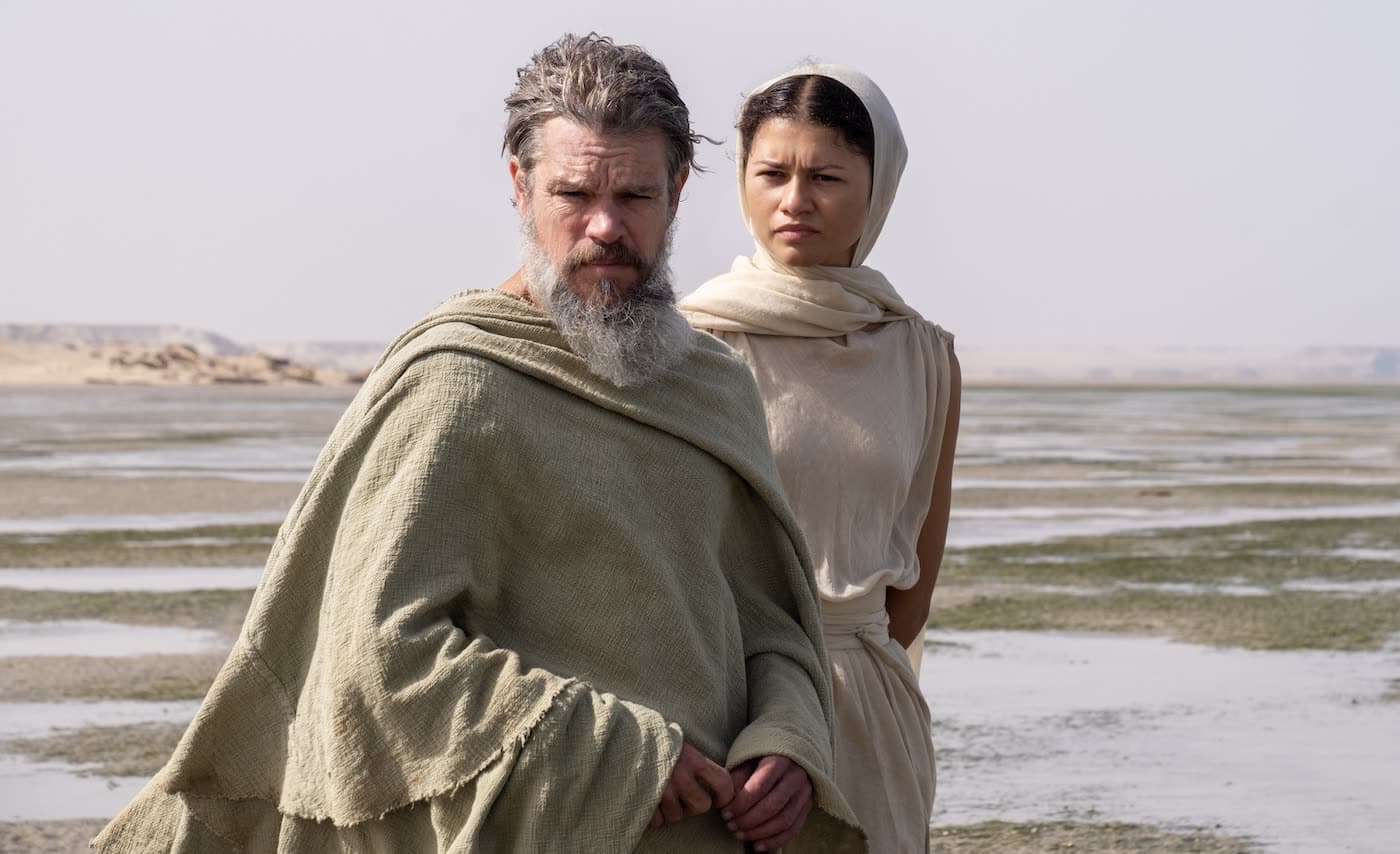
I don’t usually feel like writing about very “trendy” subjects. So as not to look like someone catching the wind of a trend for the sake of visibility. But then again — if we’re thinking about it anyway, why not share it? Never mind. Everything we do carries a question inside it; and wanting to ask the right one doesn’t oblige us to keep asking forever. A little analysis, from where I stand.
Last night I saw Nolan’s Odyssey. Like everyone else, I have more thoughts than things to say. My ears hurt a little — that’s fine, it’s my own sensitivity. Let’s begin.
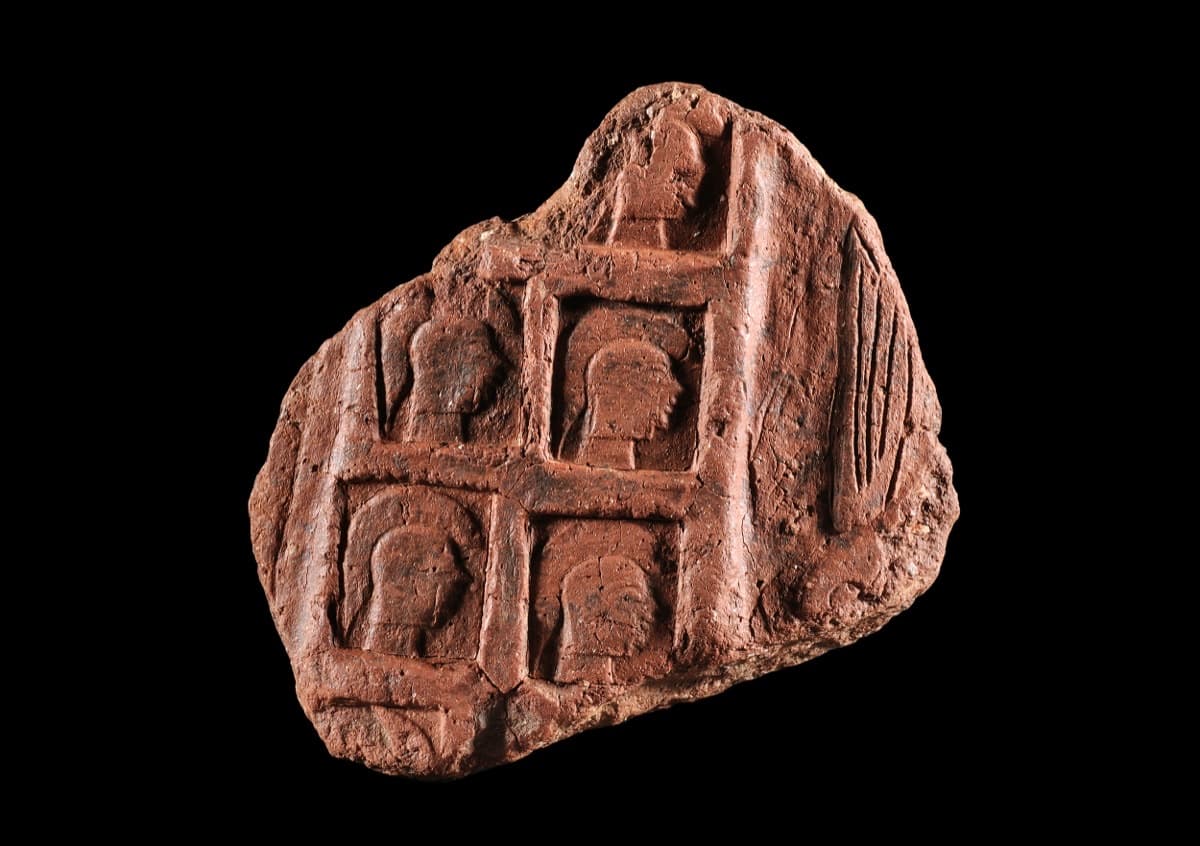
Somewhere in the middle of the film, the men on the ship come ashore on an island. Ravenous.
First they see a single sheep.
Sheep live in flocks, they reason, so there must be other animals nearby, someone who feeds them, and food. They follow, they go into a cave, they find cheese inside. So, they say, someone lives here. They have nothing to trade, naturally, but Odysseus trusts the law of hospitality: if there is a host, the stranger must be received. They light the fire and wait.
Not one of their observations is wrong. The flock really is a flock, the cheese really is cheese, the cave really is someone’s home. What is wrong is that they fill the gap in between with the rules of their own world. Where there is production there is order, where there is order there is law, where there is law there is someone across from us who can be reasoned with as we reason. Every link holds on its own. The sum is fatal.
Then the mouth of the cave goes dark. While they wait for someone like themselves, a man walks in — larger than their imagination can render: Polyphemus. He brings his flock inside and pushes that enormous stone at the mouth of the cave into place with the edge of his hand.
All of them together cannot move it. Yet to the one who put it there, that stone is only a door.
The sign wasn’t wrong, the code was
In Plato’s cave, people took the shadows on the wall for real things, and the weight of the story came from their not knowing they were in a cave. Here it is the exact reverse: they see everything correctly and still arrive somewhere wrong.
So what misleads us is not always what we don’t know. Sometimes it is the quiet permission the familiar grants: once we recognise the sign, we assume we know the code it stands in as well. The cheese may well be familiar; it doesn’t have to own the cave.
Read through Barthes, the law of hospitality Odysseus trusts works like a myth. A cultural and historical rule is carried as though it were nature itself. Odysseus doesn’t remember it as a tradition; he knows it as the way the world works. That is exactly myth’s work: to naturalise a code — to present it not as a choice but as a fact.
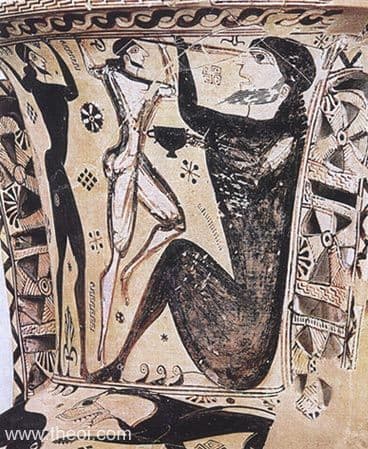
The giant doesn’t even look at them. An armed party has walked into his house and he doesn’t care; he takes two of them, eats them, and goes to sleep. He doesn’t see them as a threat, he sees them as a few insects that got inside. He doesn’t say a word, either.
Our lot blind him with a stake and get out of the cave. That is when Polyphemus speaks — he calls to his father, Poseidon, god of the sea.
They are stunned. One of the men asks Odysseus: was he speaking? If he could speak, why hasn’t he said a single word until now?
Odysseus answers with a question: do you talk to ants?
You don’t. A single step of yours can be an inexplicable catastrophe in their world, and three seconds later you don’t even remember taking it.
That call was all Polyphemus had left. For the rest of the voyage, the sea that meets them is the sea of that call.
So why do we take our own scale for the universal one? And why does recognising something produce, so quickly, the feeling that we can control it?
The same signifier, two codes
A little later the film builds the same error again, somewhere else. They find a child alone in the forest. The moment they say “child,” the thing in front of them stops being unknown: it can do no harm, it needs protecting, its meaning is settled in advance.
Then the child screams.
Armoured giants come out of the forest, and two of the three ships stay behind.
So naming a thing is not understanding it. And hearing a sound is not knowing what it says. The same signifier: two different things in two different codes. In what Umberto Eco called aberrant decoding, the receiver opens the message with a code other than the sender’s, and neither side notices. In the film the price is two ships. In life it is usually a meeting, sometimes a relationship.
That is why “I didn’t mean it like that” always falls short, isn’t it?
With the Sirens, the reverse happens.
Odysseus prepares. He has the crew’s ears stopped with wax and has himself bound to the mast. He chooses to hear — but accepts in advance that once he has heard, he will not be able to trust his own decision. What protects him is not his knowledge; it is having had himself bound beforehand.
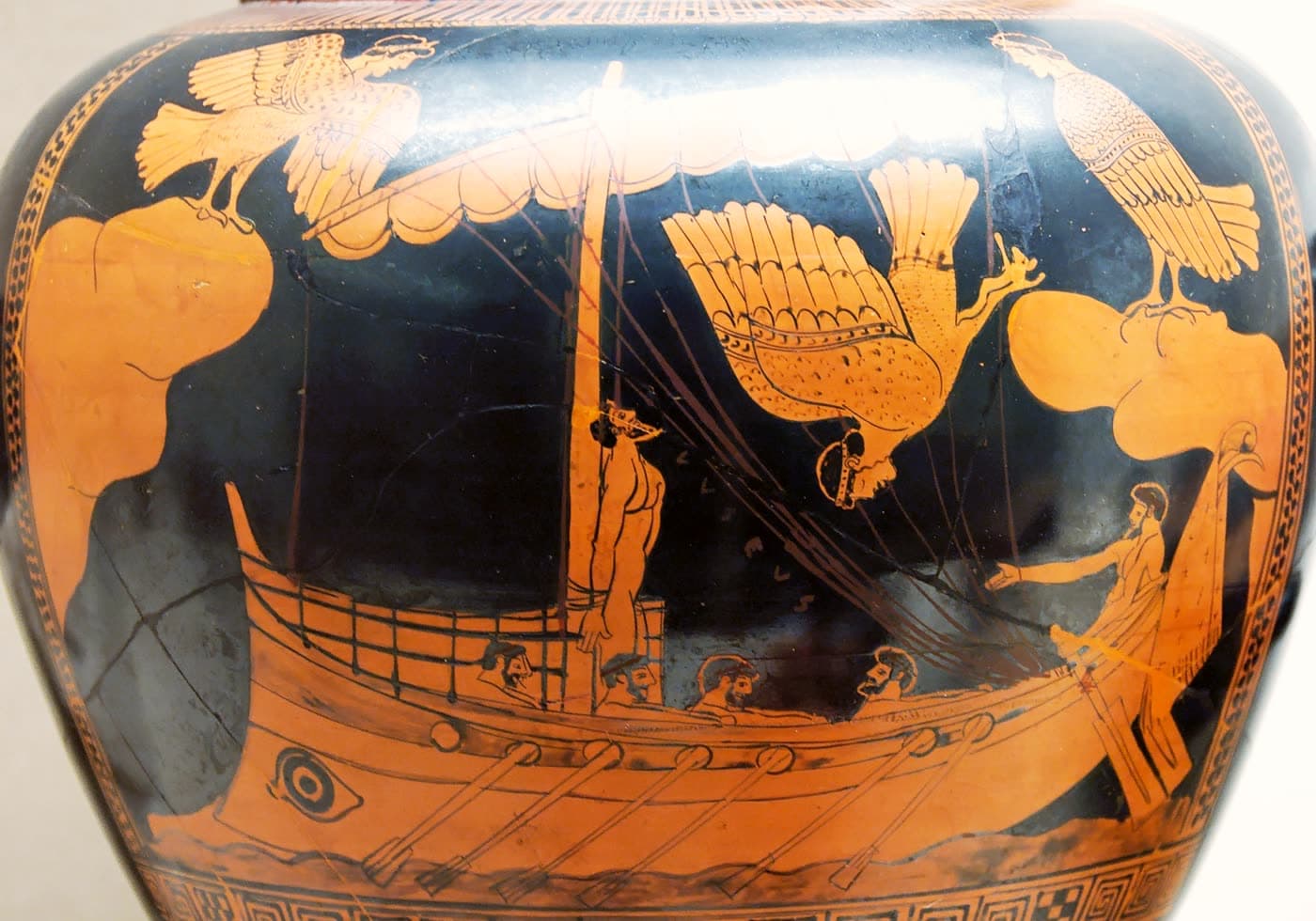
Then one of the crew takes out the wax, hears the sound, and throws himself into the sea.
On the same boat, one man binds himself and another cuts himself loose.
Both take the only decision available on that boat, in opposite directions. Because the rest are deaf, no one can confirm what he heard. No one can even ask.
A scream kills them because they don’t know the system it belongs to. The Sirens’ call kills because it knows the person exactly.
I don’t think they were carrying only a ship, weapons and provisions. They were carrying a model of how the world works. Perhaps there was no separate trial at every stop — perhaps at every stop there was another world in which that model no longer worked.
Are we going home, or to the moment we thought we’d be well?
On Calypso’s island the danger is no longer a creature outside. The film doesn’t make Homer’s Lotus-Eaters a separate stop; it carries the lotus into Calypso’s story. Calypso gives him the flower to dull his pain; as time passes, not only his memories but who he is and why he wanted to return begin to blur. Then she takes the flower back and forces him to remember.
Do we forget because we cannot return, or do we need to forget for a while in order to be able to return? I don’t know. But in the film, while his memory is being clouded, his body keeps carrying the journey.
The way off the island is not a new heroic plan either. Calypso asks him to give himself over to the sea, to Poseidon, to an outcome he cannot control. We could call this “trusting the flow,” though the phrase feels a little too clean to me. It could be exhaustion. It could be admitting that his old methods no longer open any door. I don’t have to decide which, and I don’t think the film decides either.
And here is the hardest question: did Odysseus really want to go home? In the film the delay is not explained by the whim of the gods alone. It is also left open that he may have been fleeing that return, carrying the weight of the trick he devised at Troy.
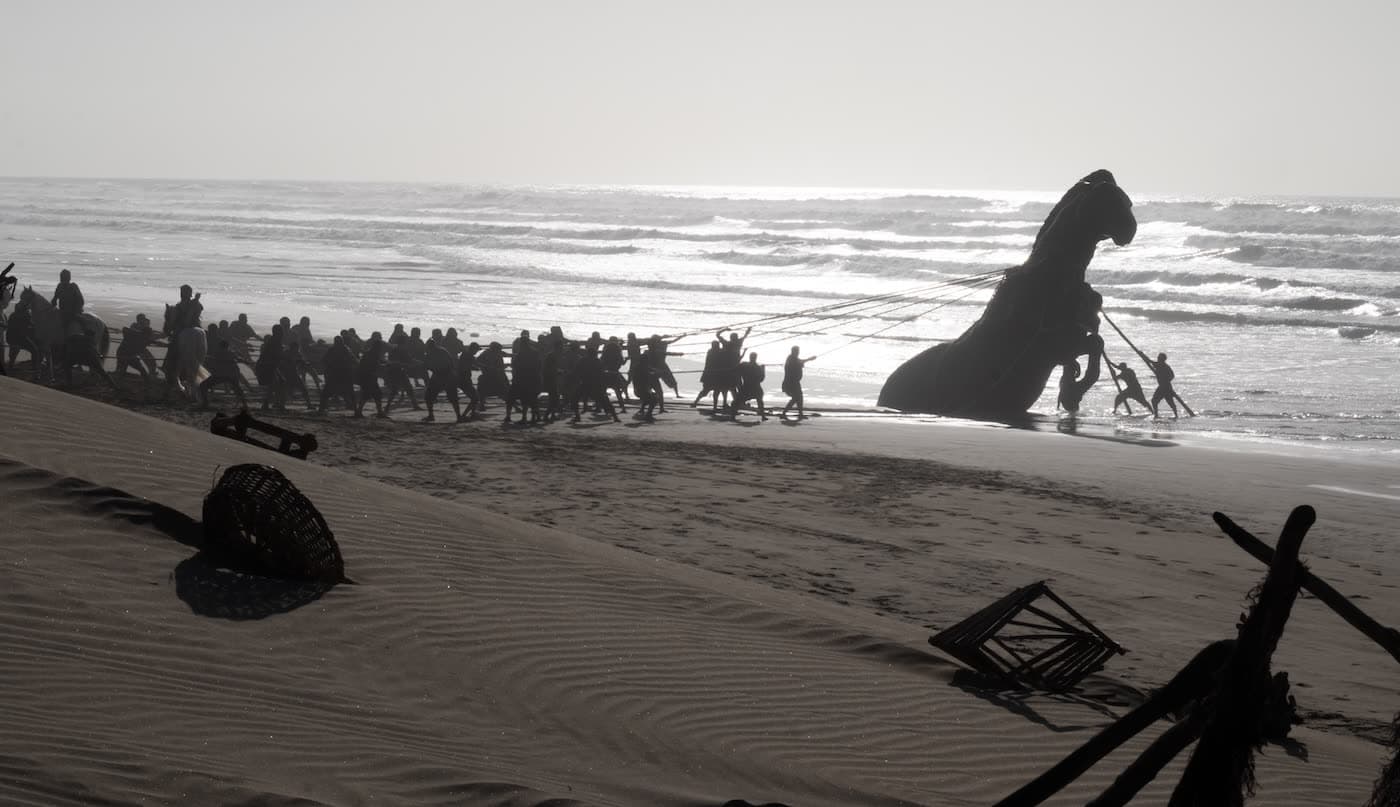
Perhaps the place he wanted to return to was not Ithaca, but the moment he thought he would have once he got there.
Because we too keep placing small “good moments” in the future. Once I’ve built that business. Once this period is over. Once the child has grown. Once I’m the way I used to be. But the person who designs that moment is the one who hasn’t set out yet; whoever arrives is not the same person. The one who sets out changes; the destination stays fixed in the mind.
So does that place accept who we are today, or is it waiting for someone we no longer are? As long as the road goes on, we can explain every lack with “I haven’t arrived yet.” Once you arrive the excuse is gone, and a harder question remains: who am I going to be now?
Why isn’t saying I’m home enough?
When Odysseus reaches home he doesn’t give his name straight away. In the cave he had been “Nobody”; in Ithaca he becomes a beggar. To be visible in his own house he must first stay invisible. The strategic reasons are plain, but the plan isn’t what interests me: after all those years, why isn’t saying “I’m home” enough?
Because he doesn’t stand in front of Penelope and declare who he is; he tells her signs from their shared past, things no one else could easily know. And Penelope doesn’t accept him on a sentence either — she tests him. His son knows him not by his name but by the tenderness he shows his dying dog.
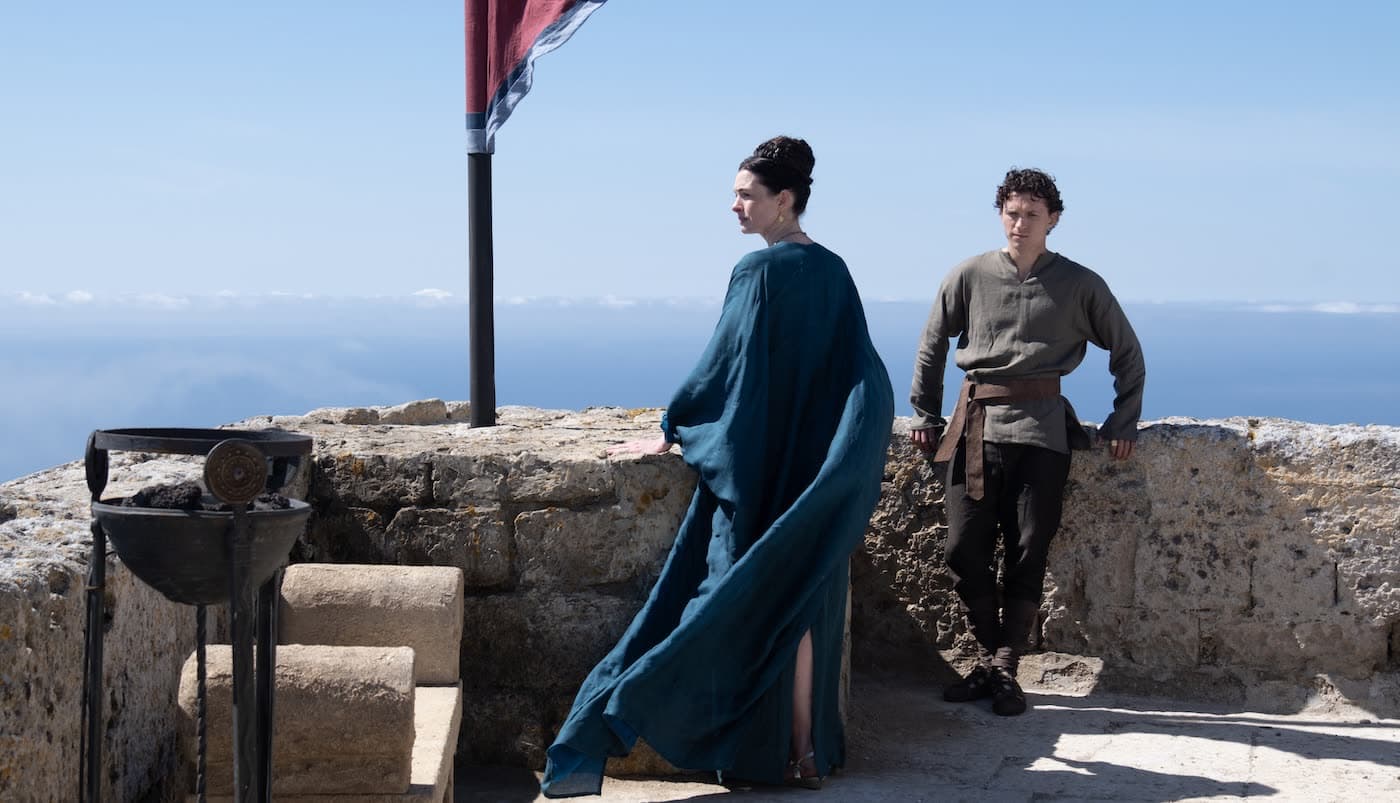
Perhaps identity is not what a person says about themselves but what is confirmed again in someone else’s memory. It isn’t declared; it is recognised, tested, rebuilt inside a relationship.
And whoever comes home has to accept that not only they have changed, but so have the ones who waited. Penelope is not the woman he left, Telemachus is not the child he left. Perhaps coming home is not a resume button but agreeing together that the old place cannot be rebuilt.
The code is in the receiver
I began with Plato’s cave and ended up in a different one. In 1620 Francis Bacon wrote that every person has a “cave” of their own: our temperament, our education, what we have read and the authorities we admire refract and colour the light of nature. So watching the same film four hundred years later and seeing entirely different things is nothing new.
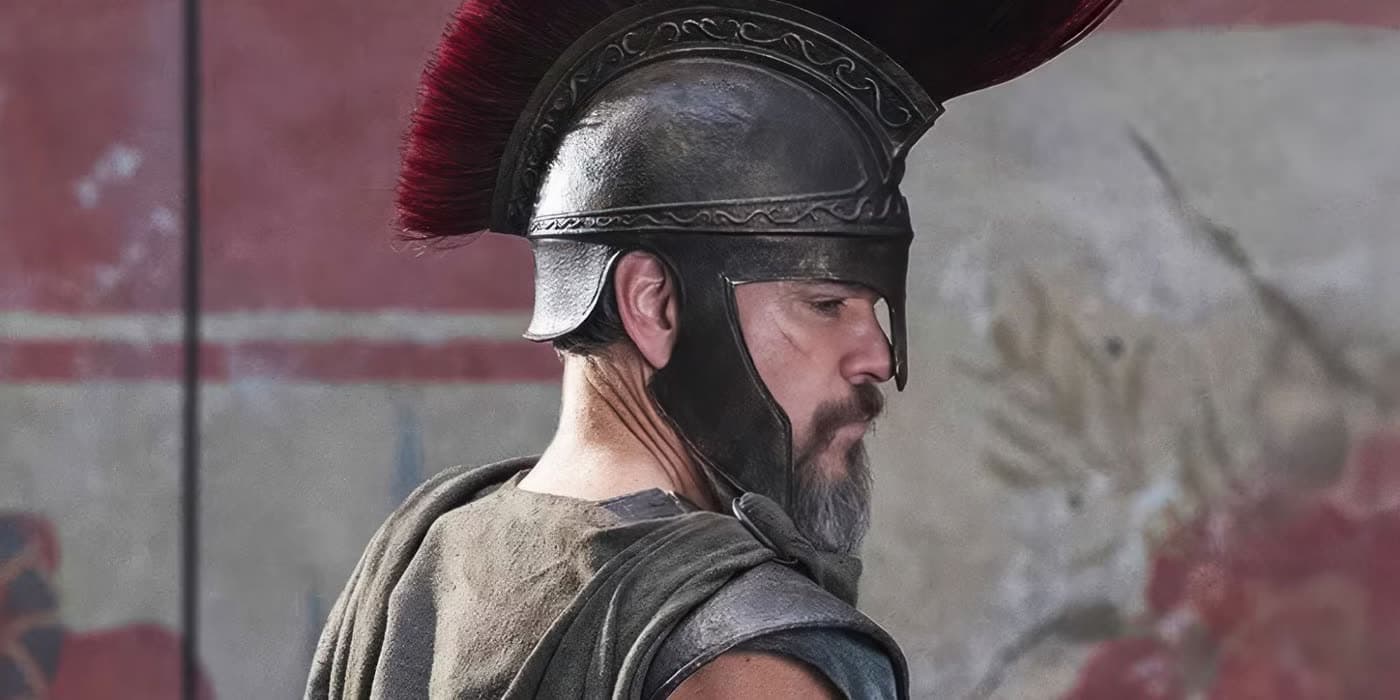
Looking at the comments, what became visible was less the film than the codes we watched it through.
Everyone puts into their bag whatever their own filter lets them take.
What happens when a code gets crowded?
So far this is individual. But filters don’t stay individual.
Once a reading is shared by enough people, it stops looking like a reading. No one defends it any more, because there doesn’t appear to be anything to defend. This is the sequence Berger and Luckmann describe: a habit is repeated, then becomes a rule, then the generation that inherits that rule finds it not as a preference but as the state of the world. Odysseus’s law of hospitality is carried in exactly this way; he doesn’t argue it, he knows it.
And once a code has entered the mechanism it no longer looks like an interpretation. It looks like a classification. Applying Bowker and Star’s approach to the film: classification systems turn over time into invisible infrastructure, and the choices that built them become invisible with them — who counts as a guest and who as a threat, which sound counts as an alarm and which as a call for help, whose name is recorded. Past a certain point these are not opinions but procedure. And whoever objects to procedure is no longer someone who thinks differently, but someone who is making a mistake.
The film leaves two traces of this. The first is the record: Agamemnon speaks from the underworld, the seers speak, the kings speak. We don’t know the names of the men at the oars. That is not a weakness of memory; it is the result of which reading was judged worth recording. The second is category: the same intelligence is called cunning in Odysseus and loyalty in Penelope. Once a category is set, it also decides what may be praised. Part of what we now call “mental load” is formed right here, I think: carry a role long enough and the work being done becomes invisible and gets taken for a person’s nature.
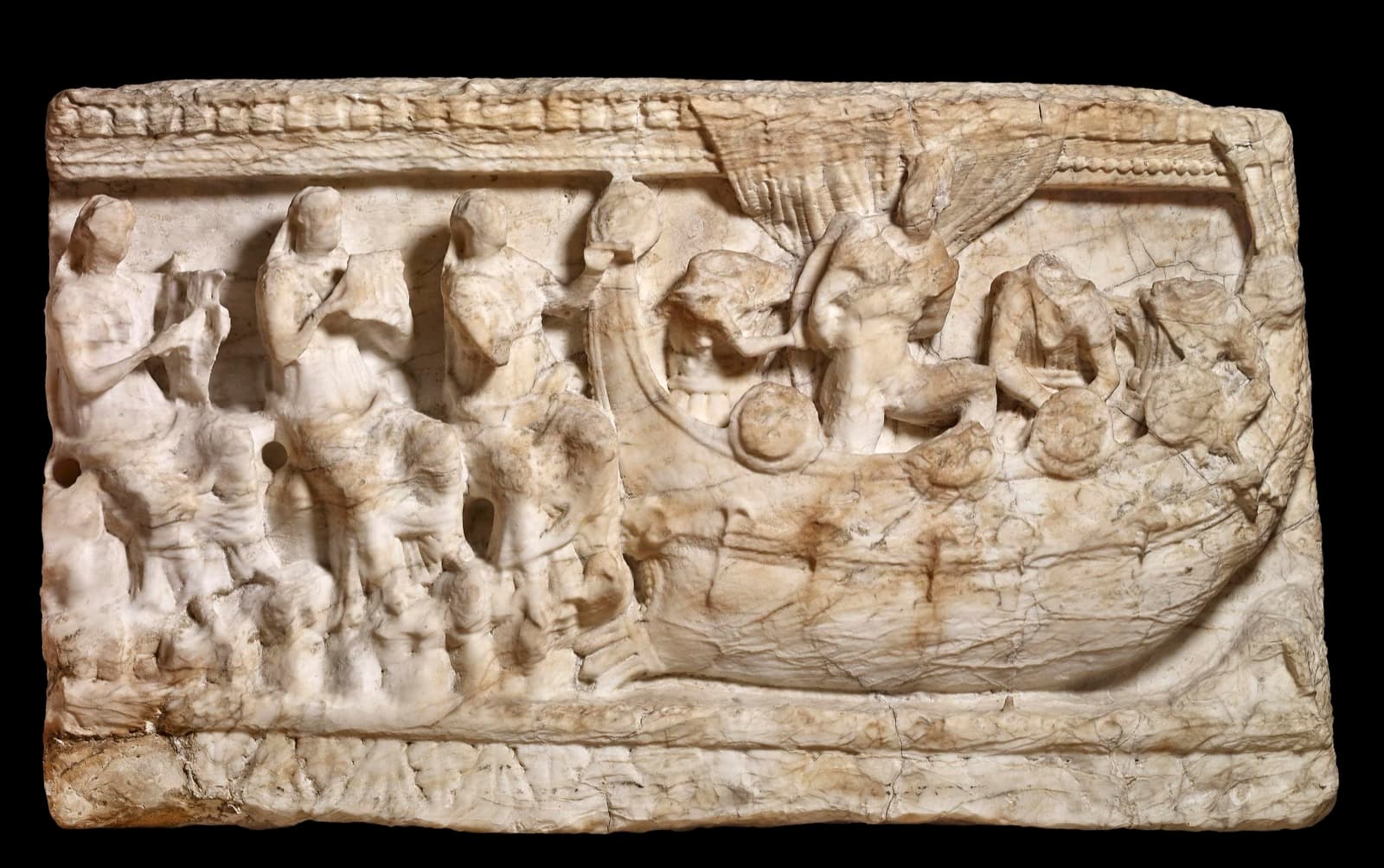
At the end of the film Odysseus reaches Ithaca, but he doesn’t restore the old order and stay. The throne passes to Telemachus; he sails west into the unknown with Penelope. In the final moments we see him both setting sail and bleeding in Penelope’s arms in the throne room, and we are not told which is real.
I have asked a great many questions; I won’t make the last sentence one. We did not choose most of what we carry, but we do choose what we go on carrying. Two things on that boat were genuinely chosen: binding yourself, and cutting yourself loose.
Rowing was never the decision.
Side notes — six things worth remembering when you come ashore in a new world
A familiar sign does not mean a familiar system. The detail you see may be right; the world you build out of those details may still be wrong.
Your scale is not the universal one. The stone you cannot shift may be someone else’s door; the threshold you find ordinary may be a wall another cannot cross.
The same sign does not say the same thing in every world. A scream can mean help in one place and alarm in another. What you intended is only one part of the meaning that forms on the other side.
For some decisions you have to accept beforehand that you won’t be able to trust yourself in the moment. What protected Odysseus from the Sirens was not his knowledge but having had himself bound in advance. Have you already decided what you will do when you hear the sentence written for you alone?
Does the place you want to return to fit who you are now? The person who set the destination and the person who arrives are not the same. Some longings were designed for someone we no longer are.
Which cave you look from is as much a part of the meaning as what you look at. Seeing someone else’s filter is easy; the hard part is putting your own history inside the picture.
Perhaps the point is not reaching answers faster, but noticing the moments when the old answers we carry keep us from seeing the new world. Technoference makes me think about this too.
You can follow the Brand Psyche newsletter on LinkedIn. Go to the newsletter
More on signs, codes and filters → Perspectives
Next essayAnne, Bak!The Moment Two Times CollideReadMelis Eryiğit Samir · Brand Psyche